


 Professor Ma Min is a professor in the Institute of Modern Chinese History, Central China Normal University (Wuhan). He is a historian whose research field is modern Chinese history, including the history of the Revolution of 1911, the history of the Chinese Chamber of Commerce, the history of Chinese expositions, and the history of Protestant missions in China. His main publications consist of Between the Government and Merchants: Gentry-Merchants in Social Upheaval in Modern China (1995); Transitional Formation: The Mystery of the Composition of Early Chinese Bourgeoisie (1993); General History of the Chamber of Commerce in China (2015, chief editor); Christianity and the Culture Integration of West and East (2013), etc. At HYI as a visiting scholar, he will work on the project on the history of a female medical missionary in Chengdu whose name is Marian E. Manly, which intends to combine medical missionary history, family history, social history, and oral history to tell a story about the close relationship and mutual love between Chinese and American folks in 1920s-1940s

Dominic Sachsenmaier holds a chair professorship in “Modern China with a Special Emphasis on Global Historical Perspectives”, and he currently serves as the director of the Department for East Asian Studies at Göttingen University. Dominic Sachsenmaier’s main current research interests include China’s transnational and global connections in the past and present. Furthermore, he has published in fields such as Chinese concepts of society, the global contexts of European history and multiple modernities. For instance, he authored the monographs “Global Perspectives on Global History” (Cambridge UP, 2011), and “Global Entanglements of a Man Who Never Traveled” (Columbia UP, 2018). Dominic Sachsenmaier serves as the president of the US-based Toynbee Prize Foundation, and he is an elected member of the European Academy of Sciences and Arts.
 Professor Don Kulick is a Swedish anthropologist and linguist, currently Distinguished University Professor at Uppsala University and Visiting Chair Professor at the University of Hong Kong. He is renowned for his research on language, sexuality, gender, disability, and vulnerability. Kulick’s notable works include Travesti: Sex, Gender, and Culture among Brazilian Transgendered Prostitutes, Loneliness and Its Opposite, and A Death in the Rainforest, which examines language loss in Papua New Guinea. His current "Engaging Vulnerability" program explores how vulnerability shapes social life and power. He has received a Guggenheim Fellowship and is recognized as a leading queer theorist.
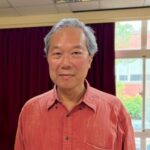
Prof. Ronnie Po-chia Hsia (夏伯嘉教授) is the Edwin Erle Sparks Professor of History at the Pennsylvania State University.
His research has focused on the history of the Protestant Reformation, Catholic Renewal, anti-Semitism, and the encounter between Europe and Asia. His current book project, tentatively titled Translating Christianity: China and the Catholic Missions 1584-1780, is a study of the history of cultural encounter between Counter-Reformation Europe and the Ming and Qing empires. His publications on the history of missions include A Jesuit in the Forbidden City and Matteo Ricci and the Catholic Mission to China.
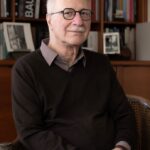 Prof. Martin Jay, Ehrman Professor of European History Emeritus, Department of History, University of California, Berkeley
Born in 1944 in New York City and educated at Union College, the London School of Economics, and Harvard University, where he received his doctorate in 1971, Martin Jay taught for forty-five years in the History Department at the University of California at Berkeley. He specialized in Modern European Intellectual History, Visual Culture and Critical Theory. With Judith Butler, he co-founded Berkeley’s graduate Program in Critical Theory. Included among his twenty-one books are The Dialectical Imagination, Marxism and Totality, Adorno, Downcast Eyes, Songs of Experience, The Virtues of Mendacity, Reason after its Eclipse, Magical Nominalism and At the Crossroads of Philosophy, Politics and Culture. His work has been translated into more than twenty languages and recognized by fellowships from the Guggenheim Foundation, the National Endowment for the Humanities, the Rockefeller Foundation, and The American Council of Learned Societies, as well as residential fellowships at the Stanford Humanities Center, the National Humanities Center, the Institute for Advanced Study, and the American Academy in Berlin. Among his awards are the American Historical Association’s Herbert Baxter Adams Award for best first book and its life-time achievement Distinguished Scholar’s Award, election to the American Academy of Arts and Sciences and the American Philosophical Society, and an honorary doctorate in humane letters from Bard College. He has been a regular columnist for Salmagundi since 1987.
